
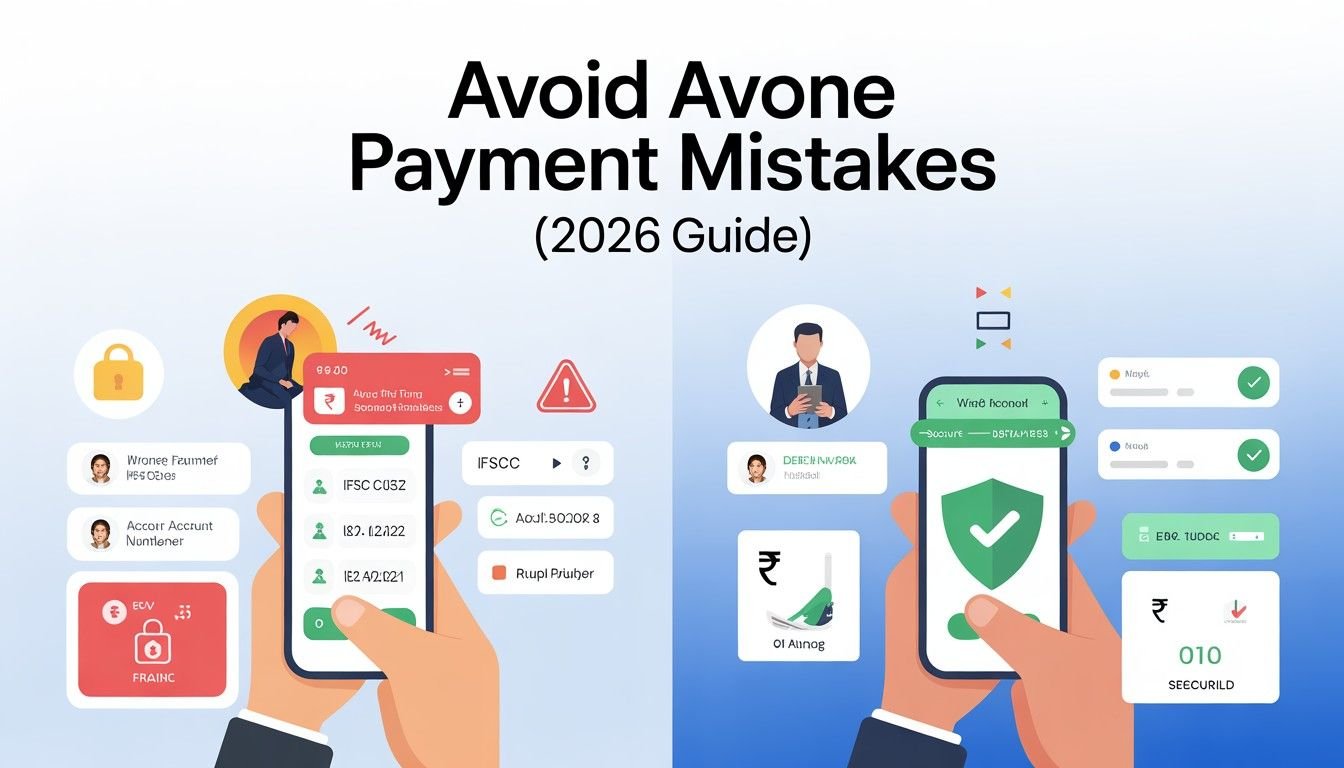
Online payments have made life incredibly convenient — from paying bills to transferring money instantly. But with convenience comes risk. A small mistake like entering the wrong IFSC code or account number can lead to failed transactions, delays, or even financial loss.
In this complete 2026 guide, you’ll learn how to avoid the most common online payment mistakes, protect your money, and ensure safe digital transactions every time.
Avoid costly online payment mistakes in 2026. Learn how to prevent IFSC errors, account number mistakes, and online fraud with expert safety tips.
🌐 Why Online Payment Errors Are Increasing
With the rapid growth of digital banking, UPI apps, and net banking, millions of transactions happen every second. While systems are secure, human errors remain the biggest cause of problems.
📊 Common reasons:
- Manual data entry mistakes
- Lack of verification
- Fake apps and phishing scams
- Poor awareness about banking details
👉 The good news: Most of these mistakes are 100% avoidable.
🏦 1. IFSC Code Mistakes (Most Common Error)
The IFSC (Indian Financial System Code) is essential for NEFT, RTGS, and IMPS transfers. Even a small mistake can result in a failed or misdirected transaction.
⚠️ Common IFSC Mistakes:
- Typing the wrong code
- Using an outdated IFSC
- Selecting the wrong bank branch
- Copy-paste errors from unreliable sources
✅ How to Avoid IFSC Errors:
- Always copy IFSC from trusted sources (bank website or passbook)
- Double-check the first 4 letters (bank code)
- Verify branch name before confirming
- Use an IFSC finder tool 😉(🔍 IFSC & MICR Code Finder – All India Bank IFSC Code and Branch Locator )
💡 Pro Tip:
Before sending large payments, try a small test transaction.
🔢 2. Account Number Errors (High Risk Mistake)
Entering the wrong account number is one of the most dangerous mistakes because money can go to the wrong person.
⚠️ Common Errors:
- Missing or extra digits
- Typing similar numbers (0 vs O, 1 vs 7)
- Copying from incorrect messages
- Saving wrong beneficiary details
✅ How to Avoid Account Number Mistakes:
- Always re-check the account number twice
- Match account name with beneficiary name
- Save verified beneficiaries only
- Avoid manual typing — copy carefully
🔐 Safety Tip:
Banks usually don’t reverse wrong transfers easily, so accuracy is critical.
🛑 3. Fraud Prevention (VERY IMPORTANT)
Online fraud has increased significantly in recent years. Cybercriminals use tricks to steal your money.
⚠️ Common Fraud Types:
- Phishing links (fake bank websites)
- Fake customer care numbers
- OTP scams
- Screen sharing scams
- Fake UPI collect requests
🛡️ How to Stay Safe:
🔒 Never Share:
- OTP
- PIN
- CVV
- Net banking password
📱 Always Check:
- Website URL (should start with https://)
- App authenticity before downloading
- Sender details in UPI requests
🚨 Red Flags:
- “Urgent payment request” messages
- Unknown links
- Calls asking for OTP
- Too-good-to-be-true offers
💡 Golden Rule:
Banks NEVER ask for OTP or passwords.
💸 4. UPI Payment Mistakes
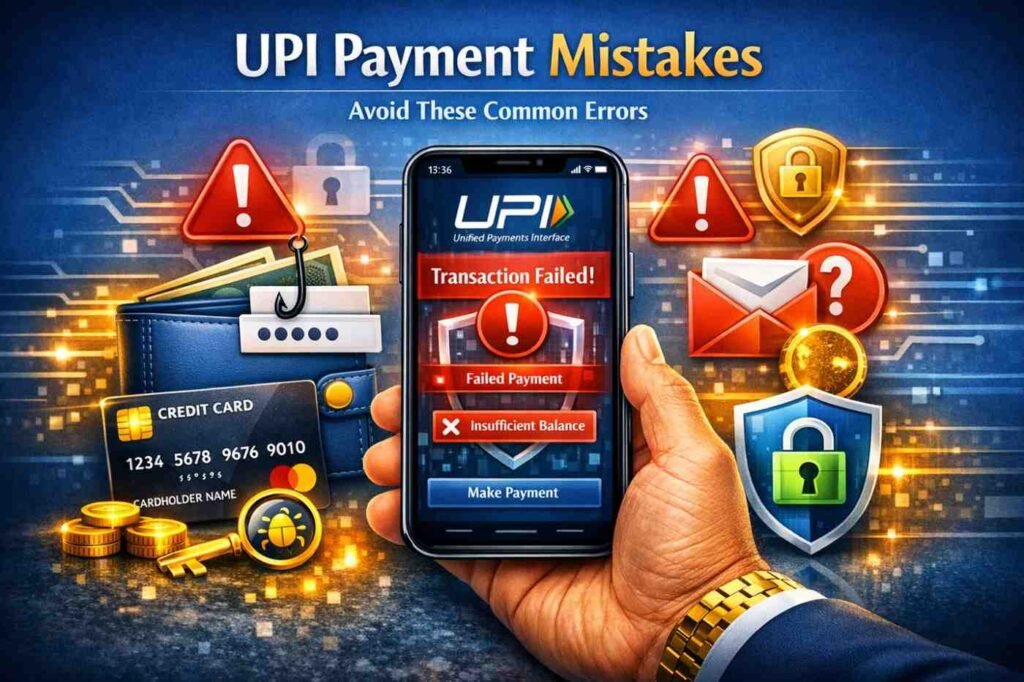
UPI is fast but risky if used carelessly.
⚠️ Common Mistakes:
- Sending money to wrong UPI ID
- Accepting fake “Request Money” alerts
- Typing wrong mobile number
✅ Prevention:
- Verify UPI ID name before paying
- Don’t approve unknown requests
- Use QR codes carefully
🧾 5. Wrong Amount Entry
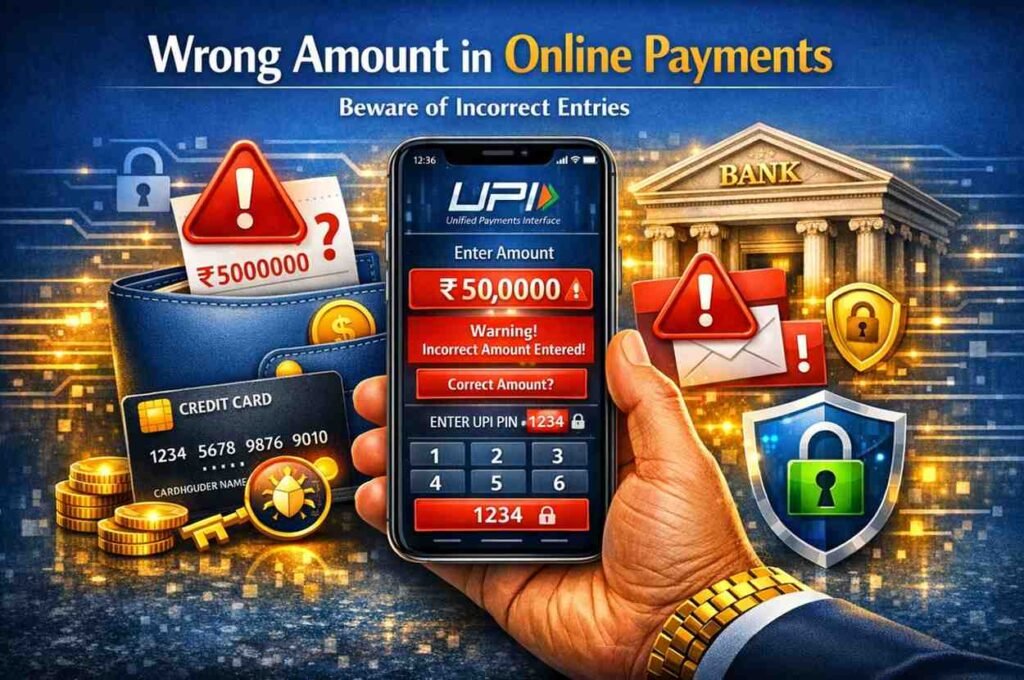
Sometimes users accidentally send:
- ₹10,000 instead of ₹1,000
- Extra zero added
✅ How to Avoid:
- Pause before clicking “Send”
- Always review amount carefully
- Enable transaction confirmation alerts
⏳ 6. Ignoring Transaction Confirmation
Many users skip checking transaction status.
⚠️ Problems:
- Payment failure confusion
- Duplicate payments
- No proof of transaction
✅ Solution:
- Always check confirmation message
- Save transaction ID
- Take screenshot for safety
🌍 7. Using Public WiFi for Payments
Public networks are not secure.
⚠️ Risks:
- Data theft
- Hacking
- Malware attacks
✅ Safe Practice:
- Avoid banking on public WiFi
- Use mobile data or secure network
- Enable VPN if needed
🔄 8. Not Updating Banking Apps
Old apps may have security issues.
✅ Always:
- Update banking apps regularly
- Use official apps only
- Enable auto-updates
📊 Quick Checklist Before Sending Money
✔ Correct IFSC code
✔ Correct account number
✔ Verified beneficiary name
✔ Correct amount
✔ Secure network
📌 Real-Life Example
Rahul wanted to send ₹5,000 to his friend. He mistakenly entered the wrong account number and didn’t verify the name.
👉 Result: Money was transferred to another account, and recovery took weeks.
👉 Lesson: Always verify before sending.
🚀 Best Practices for Safe Online Payments
- Use trusted banking apps
- Enable SMS/email alerts
- Set daily transaction limits
- Use biometric or PIN security
- Regularly check bank statements
🔐 Advanced Security Tips (2026)
- Enable 2-factor authentication
- Use strong passwords
- Avoid saving passwords in browsers
- Monitor suspicious activity
- Block card immediately if lost
🧠 Expert Tip
For high-value transactions:
👉 Always confirm details with the receiver via call
👉 Never rely only on messages
📢 What to Do If You Make a Mistake?
If you sent money wrongly:
- Contact your bank immediately
- Raise complaint
- Inform beneficiary bank
- File complaint on RBI portal
👉 Faster action = higher chance of recovery
🧾 Conclusion
Online payments are safe — if you use them wisely.
Most mistakes like wrong IFSC, account number errors, or fraud can be avoided with simple precautions.
🎯 Remember:
- Double-check details
- Stay alert
- Never share sensitive information
👉 Smart users don’t just pay — they pay safely.