
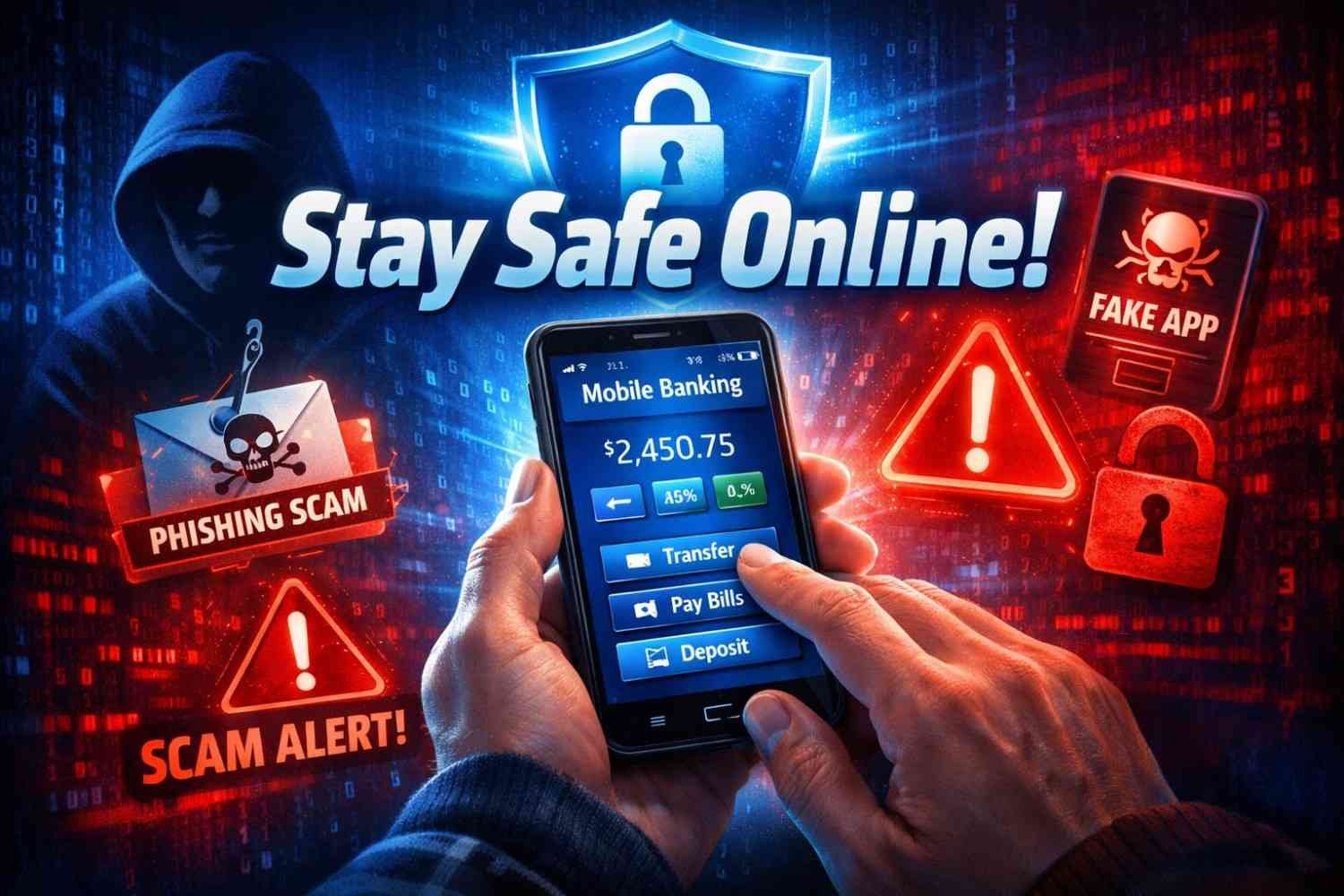
Online banking has made financial transactions faster and more convenient than ever. But with this convenience comes a serious risk—cyber fraud.
From phishing scams to fake apps, millions of users lose money every year simply because they are unaware of online banking threats.
In this complete guide, you’ll learn online banking safety tips, common scams, and how to protect your money in 2026.
🌍 Why Online Banking Security Matters More Than Eve
Digital banking usage has exploded globally. With mobile apps, UPI, and international transfers, users are constantly connected to their finances.
👉 But hackers are also evolving:
- AI-powered scams
- Fake banking apps
- Real-looking phishing emails
👉 One mistake can cost you your entire savings.
🚨 Most Common Online Banking Scams (2026)
🎣 1. Phishing Scams
Phishing is the most common type of online fraud.
🔍 How It Works:
- You receive an email/SMS pretending to be your bank
- It asks you to click a link
- You enter login details
👉 Hackers steal your information
⚠️ Example:
“Your account will be blocked. Click here to verify.”
🧠 How to Stay Safe:
- Never click unknown links
- Check sender email carefully
- Always visit official website manually
📱 2. Fake Banking Apps
Fake apps look exactly like real bank apps.
🚨 Risk:
- Steal login credentials
- Capture OTP
🛑 Safety Tips:
- Download only from official app stores
- Check developer name
- Read reviews
📞 3. OTP & Call Scams
Scammers call pretending to be bank officials.
❌ They Ask:
- OTP
- PIN
- CVV
👉 Once shared → money gone
✅ Rule:
Bank never asks for OTP
💻 4. Malware & Spyware Attacks
Malicious software can track your activity.
📌 Sources:
- Downloaded files
- Suspicious links
🛡️ Protection:
- Install antivirus
- Avoid unknown downloads
🌐 5. Public WiFi Risks
Using banking apps on public WiFi is dangerous.
⚠️ Why:
- Hackers can intercept data
✅ Solution:
- Use mobile data
- Use VPN
🔐 Essential Online Banking Safety Tips
🔑 1. Use Strong Passwords
- Combine letters, numbers, symbols
- Avoid simple passwords
🔁 2. Enable Two-Factor Authentication (2FA)
Adds extra layer of security
🔒 3. Never Share Sensitive Details
- OTP
- PIN
- Password
📲 4. Keep Apps Updated
Updates fix security vulnerabilities
🧾 5. Monitor Transactions Regularly
Check bank statements
🧠 Advanced Security Tips (PRO LEVEL)
🛡️ Use Virtual Debit Cards
Limits exposure
🔍 Check Website URL
Always ensure:
👉 HTTPS enabled
🔐 Use Dedicated Banking Device
Avoid using public/shared devices
📊 Real-Life Fraud Example
A user receives a fake SMS:
“Update KYC or account will be blocked”
👉 Clicks link
👉 Enters details
👉 Loses ₹50,000
👉 Lesson:
Never trust urgent messages
🚨 Warning Signs of Online Fraud
- Urgent messages
- Unknown links
- Requests for OTP
- Poor grammar emails
📌 What To Do If You Are Scammed
🚨 Immediate Actions:
- Block bank account
- Inform bank
- Change passwords
📞 Report to Authorities:
- Cyber crime helpline (India: 1930)
🧾 Checklist Before Every Transaction
✔ Check URL
✔ Verify receiver
✔ Avoid public WiFi
✔ Double-check amount
🌐 Safe Platforms to Use
- Trusted bank apps
- Verified payment apps
🔮 Future of Online Banking Security
- Biometric authentication
- AI fraud detection
- Blockchain security
📌 Conclusion
Online banking is safe—only if you use it wisely.
🎯 Key Takeaways:
- Never share OTP
- Avoid unknown links
- Use secure apps
👉 Stay alert = stay safe 🔐