
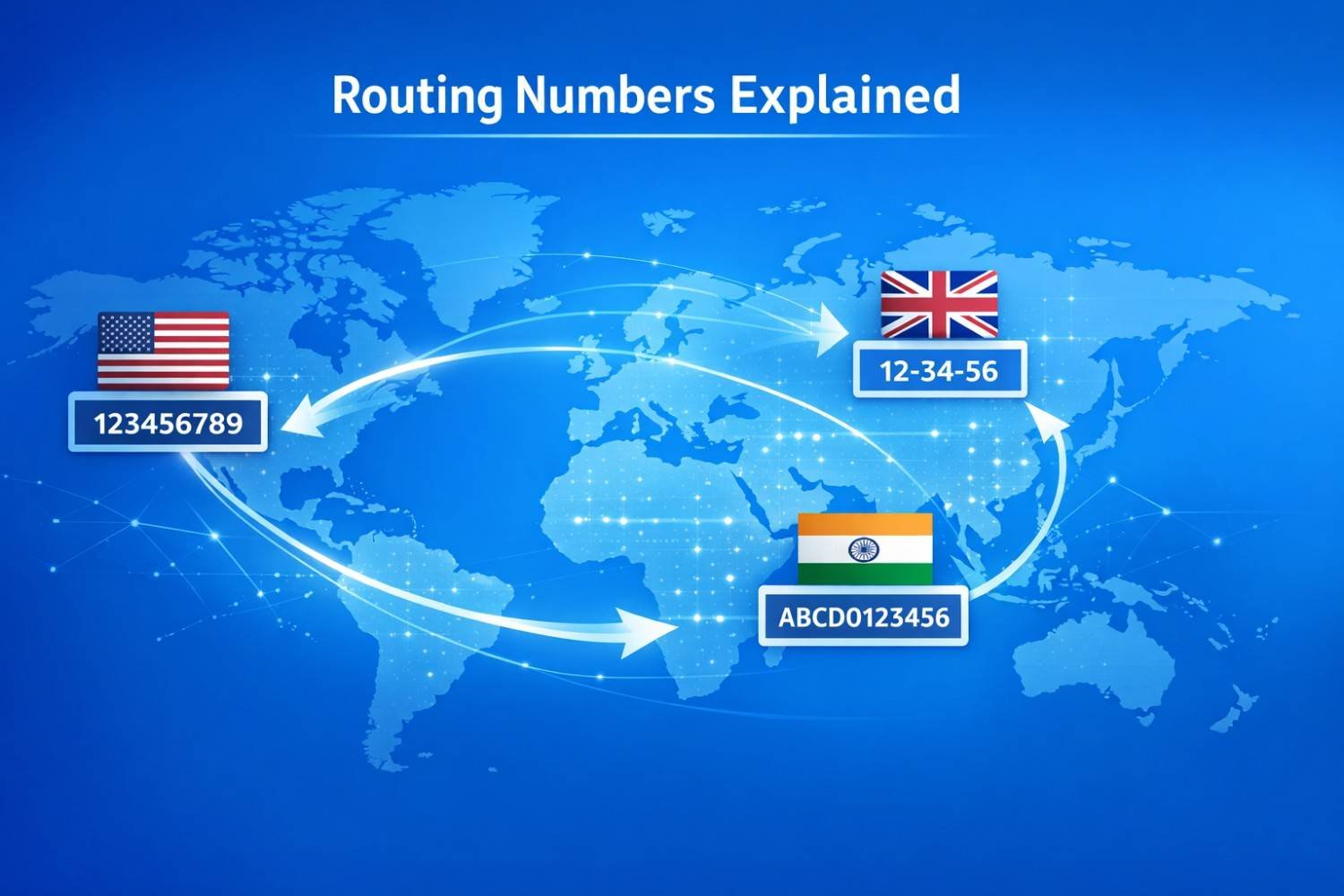
In the modern banking world, transferring money—whether locally or internationally—requires precise identification systems. Terms like routing number, sort code, IFSC, and SWIFT often confuse users, especially when dealing with cross-border transactions.
This comprehensive guide explains bank routing numbers across the USA, UK, and India, how they work, their differences, and how to use them correctly for secure transactions.
💡 What is a Bank Routing Number?
A bank routing number is a unique numeric or alphanumeric code used to identify a specific bank or branch during financial transactions.
👉 It ensures that money is sent to the correct financial institution.
🇺🇸 Routing Numbers in the USA (ABA Routing Number)
In the United States, routing numbers are known as ABA (American Bankers Association) Routing Numbers.
🔢 Format:
- 9-digit numeric code
- Example: 021000021
📌 Where Used:
- Direct deposits
- Wire transfers
- ACH payments
🏦 Managed By:
American Bankers Association
🇬🇧 Sort Codes in the UK
In the United Kingdom, routing is done using Sort Codes.
🔢 Format:
- 6-digit number (e.g., 12-34-56)
📌 Where Used:
- Domestic bank transfers
- Standing orders
- Direct debits
🇮🇳 IFSC Codes in India
India uses IFSC (Indian Financial System Code) for routing transactions.
🔢 Format:
- 11-character alphanumeric code
- Example: SBIN0001234
📌 Used For:
- NEFT
- RTGS
- IMPS
🏦 Managed By:
Reserve Bank of India
🌍 SWIFT/BIC Codes (Global Standard)
For international transfers, banks use SWIFT/BIC codes.
🔢 Format:
- 8 or 11 characters
📌 Used For:
- International wire transfers
- Cross-border payments
⚖️ USA vs UK vs India – Key Comparison
| Feature | USA | UK | India |
|---|---|---|---|
| Code Name | Routing Number | Sort Code | IFSC Code |
| Format | 9 digits | 6 digits | 11 characters |
| Usage | Domestic transfers | Domestic transfers | Domestic transfers |
| International Use | With SWIFT | With SWIFT | With SWIFT |
🔍 Why Different Countries Use Different Codes
Each country has its own banking infrastructure and regulatory system.
- USA → Large-scale banking network
- UK → Simplified domestic routing
- India → Digital banking integration
👉 Despite differences, all systems aim for accuracy and security.
🌐 How Routing Numbers Work in Transactions
When you send money:
- You enter routing code
- Bank identifies destination
- Transaction is processed
- Funds are credited
👉 Without correct routing code, transactions may fail.
⚠️ Common Mistakes to Avoid
- ❌ Using IFSC for international transfer
- ❌ Entering wrong routing number
- ❌ Confusing SWIFT with local codes
- ❌ Typing errors
✅ How to Find Routing Numbers
🏦 USA:
- Check cheque
- Bank website
🇬🇧 UK:
- Bank statement
- Online banking
🇮🇳 India:
- Passbook
- Cheque
- IFSC finder tools
🔐 Security Importance
Routing numbers help:
- Prevent transaction errors
- Ensure secure transfers
- Reduce fraud risk
💸 Real-Life Example
A company in the USA sends money to India:
👉 Uses:
- Routing number (USA)
- SWIFT code (India)
👉 Result:
- Successful international transfer
🚀 Future of Banking Codes
- Unified global systems
- Blockchain integration
- Faster payments
📌 Conclusion
Understanding routing numbers is essential for safe banking.
🎯 Key Takeaways:
- USA → Routing Number
- UK → Sort Code
- India → IFSC Code
- Global → SWIFT Code
👉 Always verify codes before sending money.