
1. Introduction to RTGS: The Expressway of Indian Banking
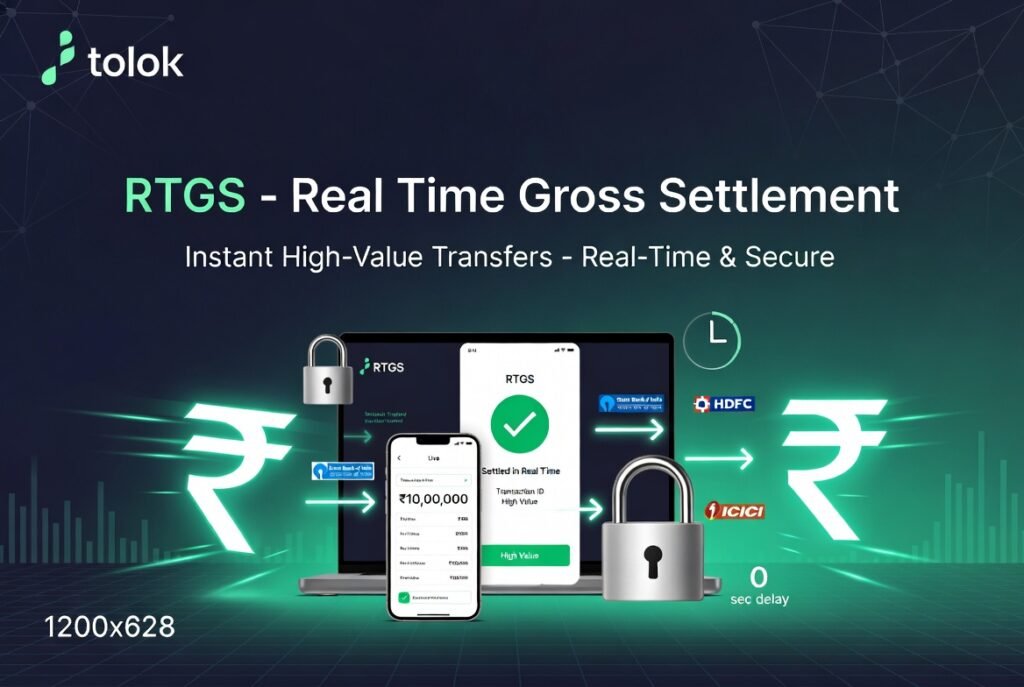
In the sophisticated landscape of Indian digital finance, RTGS serves as the ultimate “expressway” for high-value fund transfers. Standing for Real Time Gross Settlement, this system is managed and operated directly by the Reserve Bank of India (RBI). Unlike other payment systems that cater to retail or small-value transactions, RTGS is the premier mechanism designed specifically for the speed and security required when moving large sums of money across the nation’s banking network.
Historically, RTGS was restricted by bank working hours and specific windows. However, in a landmark move to bolster India’s digital economy, the RBI made RTGS available 24x7x365 starting from December 14, 2020. This transition ensures that whether you are a corporate treasurer handling a multi-crore acquisition or an individual closing a high-value property deal, your funds move with the highest priority, regardless of bank holidays or weekends.
2. What is RTGS? A Detailed Breakdown
To appreciate why RTGS is the preferred choice for large-scale financial obligations, one must understand the two core pillars of its definition:
- Real Time: In the banking context, “Real Time” refers to the processing of instructions at the very moment they are received by the system. There is no “waiting period” or batching. As soon as the sending bank initiates the transfer, the RBI’s Clearing Centre in Mumbai processes the instruction.
- Gross Settlement: Unlike the National Electronic Funds Transfer (NEFT) system, which settles transactions in “netted” batches every half hour, RTGS settles each transaction on a one-to-one basis. This “Gross” settlement means each payment is a standalone event in the RBI’s books, ensuring that the failure of one participant bank does not cause a systemic ripple effect.
RTGS is strictly a “credit-push” system. This means transactions can only be originated by the payer (the sender). The beneficiary cannot “pull” or initiate a request to draw funds from the sender’s account. This architecture provides an inherent layer of security, as the sender maintains total control over the timing and authorization of the fund movement. Under Section 23 of the Payment and Settlement Systems Act, 2007, the settlement in RTGS is final and irrevocable once the accounting entries are made in the RBI’s books.
3. Key Features, Eligibility, and the NRI Context
- RBI Regulated: Being a system owned and operated by the central bank, it carries the highest legal backing and sovereign security.
- Transaction Speed: The primary objective is immediate finality. While the target for crediting the beneficiary is near-instant, RBI guidelines mandate that the beneficiary bank must afford credit to the recipient’s account within 30 minutes of receiving the fund transfer message.
- Targeted Use: It is exclusively for high-value transactions. The system is optimized for corporate payments, inter-bank transfers, and large personal investments.
- Eligibility: Any individual, firm, or corporate entity with an account at an RTGS-enabled bank branch can use the service.
The NRI Perspective: For Non-Resident Indians (NRIs), RTGS is a vital tool for managing Indian-sourced income or repatriating funds. You can use RTGS to transfer money to and from NRE (Non-Resident External) and NRO (Non-Resident Ordinary) accounts. However, as a Senior Banking Consultant, I must emphasize that these transfers are strictly subject to the Foreign Exchange Management Act (FEMA), 2000 and the Wire Transfer Guidelines.
4. How RTGS Works: A Technical and Step-by-Step Guide
The Online Process (Net Banking/Mobile App)
- Login & Beneficiary Addition: Access your portal and add the recipient. Note that many banks impose a “Cooling-off Period” for new beneficiaries.
- Navigation: Select “RTGS” under the fund transfer section.
- Details Entry: Enter the Beneficiary Name, Account Number, Account Type, and the 11-digit IFSC Code.
- Transaction Amount: The amount must be at least ₹2 lakh.
- Authentication: Use the mandated two-factor authentication (OTP or Security PIN).
5. RTGS vs. NEFT vs. IMPS: Comparison Table
| Feature | RTGS | NEFT | IMPS |
| Min. Limit | ₹2 Lakh | ₹1 | ₹1 |
| Max. Limit | No RBI Limit | No RBI Limit | ₹5 Lakh |
| Settlement | Real-time / Gross | Half-hourly Batches | Instant |
| Availability | 24/7/365 | 24/7/365 | 24/7/365 |
6. Conclusion
RTGS remains the gold standard for high-value financial transfers in India. Its combination of real-time finality, central bank management, and 24/7 availability makes it indispensable for modern commerce and high-net-worth individuals.