
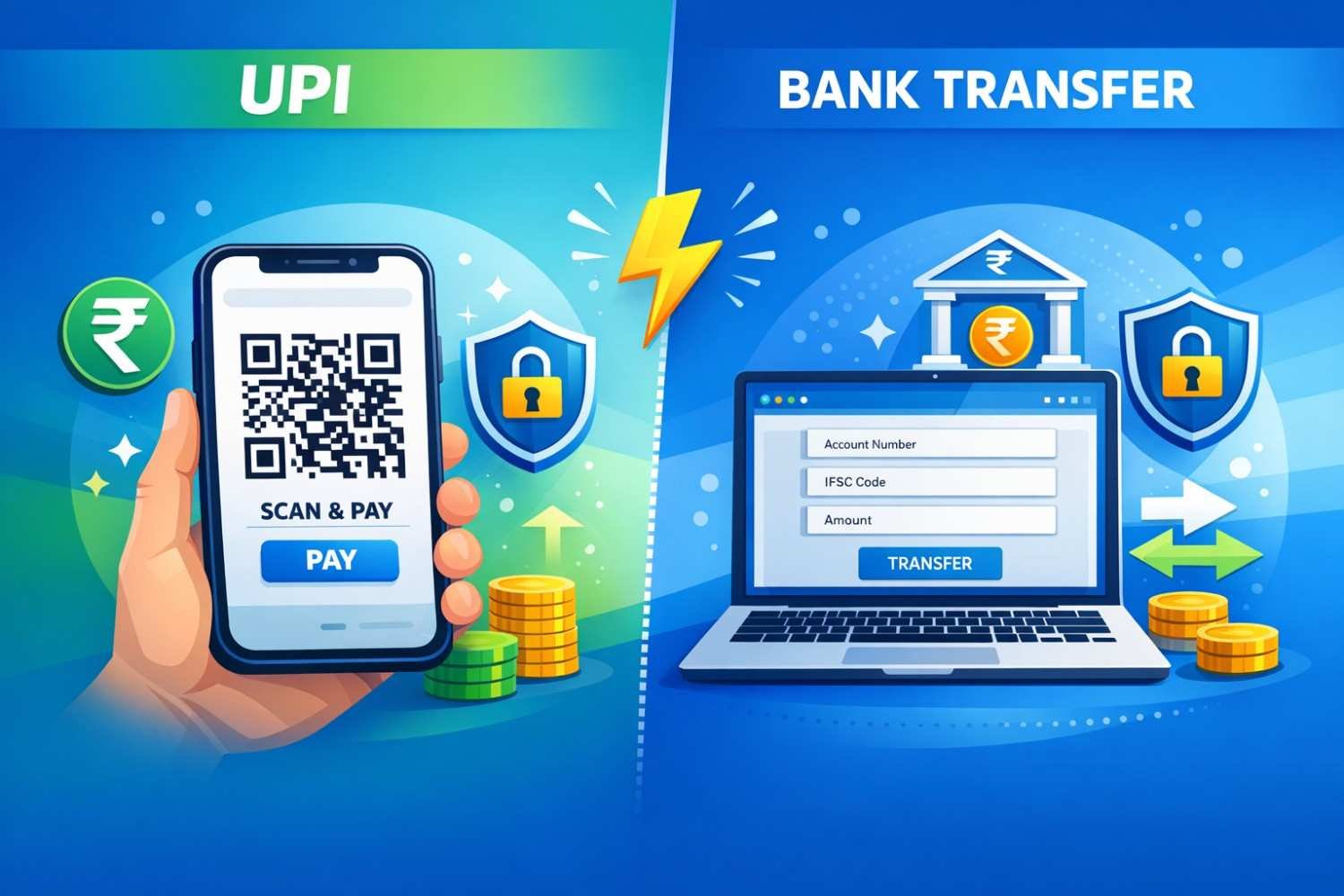
Compare UPI vs Bank Transfer in India. Learn which is faster, safer, cheaper, and best for daily payments or large transfers in 2026.
📖 Introduction
India has rapidly transformed into a digital payments powerhouse, largely due to innovations like National Payments Corporation of India and the massive adoption of Unified Payments Interface.
Today, users can transfer money instantly using mobile apps or rely on traditional bank transfers such as NEFT, IMPS, and RTGS. But the big question remains:
👉 Which is better – UPI or Bank Transfer?
This detailed guide will help you understand the differences, advantages, disadvantages, and best use cases so you can choose the right option for your needs.
📊 What is UPI?


UPI (Unified Payments Interface) is a real-time payment system developed by NPCI that allows instant money transfers between bank accounts using a mobile device.
🔑 Key Features of UPI:
- Instant 24×7 transfers
- No need to enter bank details repeatedly
- Uses UPI ID (like name@bank)
- QR code-based payments
- Works across apps like Google Pay, PhonePe, and Paytm
🏦 What is Bank Transfer?


Bank transfers are traditional methods of transferring money directly between bank accounts using systems like:
- NEFT (National Electronic Funds Transfer)
- IMPS (Immediate Payment Service)
- RTGS (Real-Time Gross Settlement)
These methods are offered by banks and regulated by the Reserve Bank of India.
⚔️ UPI vs Bank Transfer – Detailed Comparison
🚀 1. Speed
- UPI: Instant (seconds)
- IMPS: Instant
- NEFT: Batch processing (can take minutes to hours)
- RTGS: Real-time but mainly for large transactions
👉 Winner: UPI (fastest & most consistent)
💰 2. Transaction Charges
- UPI: Mostly FREE
- NEFT: Usually free (some banks may charge)
- IMPS: ₹2–₹25 depending on amount
- RTGS: Charges may apply for high-value transfers
👉 Winner: UPI (zero cost)
🔐 3. Security
UPI uses:
- Two-factor authentication (PIN + device)
- Encrypted transactions
Bank transfers use:
- OTP + login credentials
👉 Both are secure, but UPI is simpler for users.
👉 Winner: Tie
📈 4. Transaction Limit
- UPI: Usually ₹1 lakh per day (can vary)
- IMPS: Up to ₹5 lakh
- RTGS: No upper limit (ideal for big transfers)
👉 Winner: Bank Transfer (for large amounts)
📱 5. Ease of Use
- UPI: Simple, mobile-based, QR scan
- Bank Transfer: Requires account number, IFSC code
👉 Winner: UPI
🌍 6. Accessibility
- UPI works on smartphones with internet
- Bank transfer works via:
- Net banking
- Mobile banking
- Branch visits
👉 Winner: UPI (more convenient)
📊 Summary Table
| Feature | UPI | Bank Transfer |
|---|---|---|
| Speed | Instant | Varies |
| Charges | Free | Sometimes charged |
| Limit | Lower | Higher |
| Ease | Very easy | Moderate |
| Best For | Daily use | Large transfers |
✅ Advantages of UPI
- Instant money transfer
- No bank details required
- Free transactions
- Widely accepted across India
- Perfect for small payments
❌ Disadvantages of UPI
- Transaction limit restrictions
- Requires internet
- Occasional server downtime
✅ Advantages of Bank Transfer
- Suitable for large payments
- Highly reliable
- Accepted globally (via SWIFT)
❌ Disadvantages of Bank Transfer
- Slower (especially NEFT)
- May include charges
- Complex details required
🎯 Best Use Cases
🛒 Use UPI When:
- Paying for groceries
- Splitting bills
- Online shopping
- Small business payments
🏢 Use Bank Transfer When:
- Sending large sums
- Business transactions
- International payments
- Salary transfers
🔮 Future of Payments in India
UPI is evolving rapidly with:
- UPI Lite
- UPI Autopay
- Credit on UPI
India is moving towards a cashless economy, and UPI is leading this revolution.
🧠 Conclusion
If you’re looking for speed, convenience, and zero cost, UPI is the clear winner.
But if your needs involve large transactions, business payments, or international transfers, traditional bank transfers still hold strong importance.
👉 Final Verdict:
- Daily Payments → ✅ UPI
- Large Transfers → ✅ Bank Transfer